
Maywood Previous Resident Sources
No single roll provides an unbroken list of Maywood previous residents. The useful evidence arrives in dated layers. Current parcel data supplies a Property Index Number, or PIN. The Clerk's recording index carries the modern ownership chain, while printed directories, the public census, Sanborn maps, and newspaper cards bridge earlier periods. Start with the source closest to the date of interest, but keep a second source beside it. A deed identifies parties to a transfer, not everyone in the home. A census names a household on one census date, not every person who occupied the address during the decade.
| Source | Years It Covers | Where Held | What It Shows |
|---|---|---|---|
| Cook County recordings index | 1985 to present | County Clerk online and records counter | Grantor, grantee, instrument, date, PIN, and legal description |
| Maywood directories | 1898, 1917, and 1954 verified leads | Maywood Public Library, FamilySearch, and cited collections | Printed names and addresses for a dated year |
| Sanborn atlases | 1895 and 1905 to 1951 cited | Library of Congress and local research files | Street layout, lots, footprints, and building use |
| Federal census | Individual schedules through 1950 | National Archives | Household names, relationships, ages, and address context |
| Maywood Herald cards | 1885 to 2002 | FamilySearch and Maywood Public Library | Obituary date and surname leads for a past household |
For a recent transfer, begin with the Cook County Recordings System. For a mid-century household, use the 1950 census and the cited 1954 directory lead. For the early twentieth century, compare the 1917 directory catalog with a Sanborn sheet and obituary card. The full shelf and catalog context belongs on the Maywood city directory page; here, those collections serve the address timeline.
Maywood Deeds Cross an Online Cutoff
The current Cook County Clerk Recordings page is the right office route even when an older citation says Recorder of Deeds. The former Recorder operation moved to the Clerk on December 7, 2020. The online land-record index is described as covering 1985 to the present. That date is an access boundary, not the birth of the parcel. Earlier instruments may require help from the recordings counter, a tract-book search, or a focused written request.
Save the instrument number and recording date before buying a copy. The April 2024 schedule lists a non-certified electronic download at $5, non-certified paper at $27.50, certified paper at $55, and a certified digital PDF at $65. Recheck the current recording fee schedule before ordering. An index line can guide a chain, but the instrument itself controls the names, legal description, and interest conveyed.
Note: The online 1985 cutoff calls for counter research, not a guess that earlier Maywood ownership records do not exist.
Trace Maywood Owners Backward
Build the deed chain from a parcel identity, not from a surname alone. Locate the Maywood address in CookViewer, select the exact parcel, and record its PIN and legal description. The tax mailing address is useful as a clue, but it is not proof that the recipient lived at the site. Move next to recorded instruments and follow each transfer backward. A stable legal description is usually safer than an address spelling that changed between a directory, map, and modern portal.
- Normalize the current address and select its exact PIN in CookViewer or the Assessor result.
- Search the recordings index for the current acquisition instrument. Save the document number, date, parties, PIN, and legal description.
- Take the seller, the grantor, and search that person or entity as a prior grantee. Confirm the parcel description before joining the two records.
- Repeat the handoff one instrument at a time until the search reaches the online cutoff or a break in the legal description.
- For an older gap, ask the Clerk's counter about tract books, then add dated directory, census, probate, and map evidence.
The National Archives 1950 Census search provides the public federal schedule used for the household step.
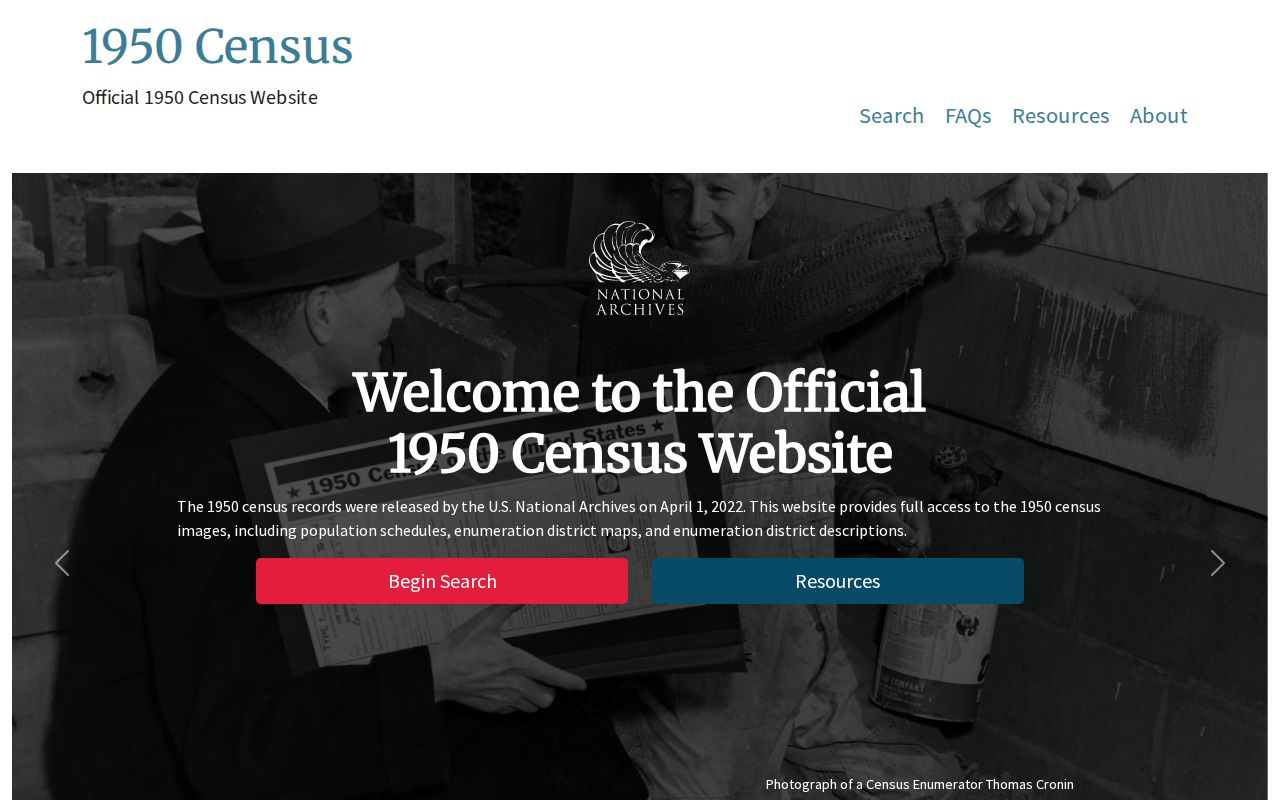
The captured search view underscores that a census result belongs to one dated schedule and must be matched back to the address.
- Grantor and grantee
- The grantor gives or transfers an interest; the grantee receives it.
- Chain of title
- The dated sequence of recorded interests linked to the same land.
- Legal description
- The formal lot, block, parcel, or boundary description that identifies land more precisely than a street label.
Maywood House History Leads
Maywood has no verified, stand-alone online house-history service. The best route is distributed. The Maywood Public Library local-history collection recommends making an appointment and points researchers toward county, state, federal, and newspaper resources. Its restored Carnegie building includes local-history and board space, a useful reminder that clippings, housewalk programs, and small printed items may remain off the open web.
The National Park Service bibliography names the 1898 Official Directory of Maywood, Illinois, the 1904 Maywood and Its Homes, a 1926 clipping file, and housewalk material. A full online scan of the 1898 or 1904 work was not located. Use each exact title, year, and publisher as a catalog request. Pair any address found there with the PIN and a Sanborn sheet rather than assuming the modern street form is unchanged.
The library's own history is part of the archive story. It began in 1874, opened its Carnegie building in 1906, received a PWA remodel in 1936, and later expanded into a combined 43,000-square-foot facility. That long local role makes staff-assisted research especially valuable for previous residents whose trail never reached a county web portal.
Map Past Maywood Households
Sanborn fire-insurance maps describe buildings and streets, not people. The Library of Congress has a Maywood-related 1895 atlas item, and local survey citations point to Maywood sheets from 1905 through 1951. Those maps can show a footprint, alley, lot pattern, rear structure, or a change in use. Match that built setting to a directory name or census household. Do not turn a building label into an occupant claim.
- Write the old address exactly as the directory or census gives it, including directions and nearby cross streets.
- Find the matching census enumeration district and household on the 1950 Census site, then save the page and line.
- Open the closest dated Sanborn sheet and compare street, lot, footprint, alley, and institutional use.
- Normalize the modern parcel in CookViewer and record any address or PIN mismatch without forcing a match.
No official source established one universal Maywood street-renumbering year. Preserve each variant. Railroad tracks, the Des Plaines River, and the original narrow village plat can serve as map anchors when an old number no longer resolves.
Maywood Obituaries Close Gaps
The Maywood Herald Obituary Card Index spans 1885 to 2002 and contains 62,054 cited images. Search a surname found in a directory, keep the spelling on the card, and use its date to locate the newspaper notice. An obituary may connect relatives, institutions, and a later place, but it should remain a lead until the notice or a vital record is checked.
Probate and naturalization material can bridge the next gap. The Illinois State Archives Cook County holdings search lists probate case-file indexes, administrator bonds and letters, naturalization indexes, and related series through the Northeastern Illinois University depository. Ask for the series title, file number, dates, and copy path. A name-only index match is too thin to assign to a household without that file context.
When a probate or other older court lead identifies a case number, use the Clerk's archived court document request path.
The request screen is a fallback for a known file, not an open directory of Maywood households.
Confirm Maywood Previous Residents
Ownership and residence are different facts. Printed city directories can name people at an address between census years. The 1917 Maywood and Melrose Park catalog record is verified, but the page images and any reverse street section must be checked at FamilySearch or a participating center. The 1954 village directory is a cited lead whose scan or holding location remains unconfirmed. Label each entry with its title, year, page or image, and section.
Federal individual census schedules are public only through 1950 under the 72-year rule. A census can name a whole household and its relationships on a fixed date. Compare it with the closest directory year, then test a surname in the obituary cards. This three-source method helps distinguish a person who owned the property from someone who lived there, and it shows when a household changed between dated snapshots.
A useful evidence card keeps three addresses apart: the normalized situs address, the tax-bill mailing address, and the historic directory or census address. Add the PIN, ZIP, year, and source citation. That small habit prevents many false joins when tracing who lived here before.
Lawful use. Research Maywood previous residents for house history, genealogy, heirs, and personal curiosity. Never use an address trail to stalk, harass, intimidate, or harm a living person.